The World Of Film
 | |
| Los Angeles, California. The place where you'll want to be! |
 |
| The famous Hollywood sign in L.A. You can live there! |
Hey there, prospective film makers!
First off, I want to say congratulations to you for choosing film as your field
of study. A wise decision. After all, who doesn’t love movies? And who wouldn’t
love to live in Los Angeles with big money from your own masterpieces? If you’re
here, you obviously want to learn the art of communication to your audience
through your own films (and hopefully make big bucks). Before we get in detail
with what you’ll need to know, it’s imperative that we first start with the
basics. Once you understand that, you’ll quickly realize that in order to create
a Hollywood quality film with that essential communication, you’ll need to do a
lot more than simply point a camera at someone and say “action”! You’ll need
passion, perseverance, patience, and a remarkable ability to work with people
if you hope to make it big in Los Angeles as a film maker. Before going into
the basics of communicating through filming, let’s start with a brief overview
of what filming itself actually is.
Overview
 |
| An example of a "set" with typical film equipment. |
Now that you understand that
communicating through films is much more than simply pointing a camera and
screaming "action!", you’re probably wondering what else it involves. Filming by
itself is not difficult; the essentials that you need are:
- A video camera to record
- People to act
- A fast computer to edit
- A good set where you’ll shoot the movie with all that equipment
- Other misccellaneous items, such as a spotlight and microphone.
While I’m at it, I guess I can go over
some key terms as well. In simplest definitions:
- Shoot - a term we use for actually recording a video with the video camera.
- Actors - the people that you shoot on a set. They star in your movies.
- Set - A film environment where all the shooting happens.
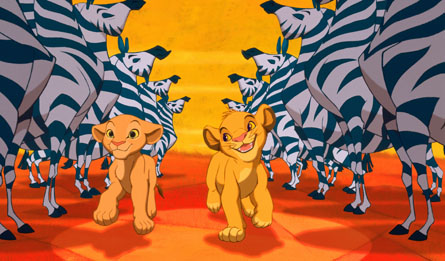 |
| Not all films have "actors" or "sets". Cartoon films usually don't. |
Basics
of Communication
 |
| Communicating through films becomes second nature in time. |
So now that you know a basic overview of
filming itself, let’s talk about the basics of how we actually communicate
through our movies. You’re probably wondering “so, if filming requires more
than just a video camera and people to communicate, what else does it need?” Well,
there’s a whole list of them, but since this is meant to be just a beginner’s
guide and not a textbook for professionals, here’s a few important ones we are
going to discuss:
- Lighting - I'll be using the genre horror as an example; how lighting brings that suspense to the audience!
- Characters - Cartoon films usually do a great job with creating relatable characters that "talk" to the audience, so I'll talk more in detail about that.
- Music - I'll be using kissing scenes in films to make this easy to understand; background music is often present during them, giving those scenes more "power" and depth.
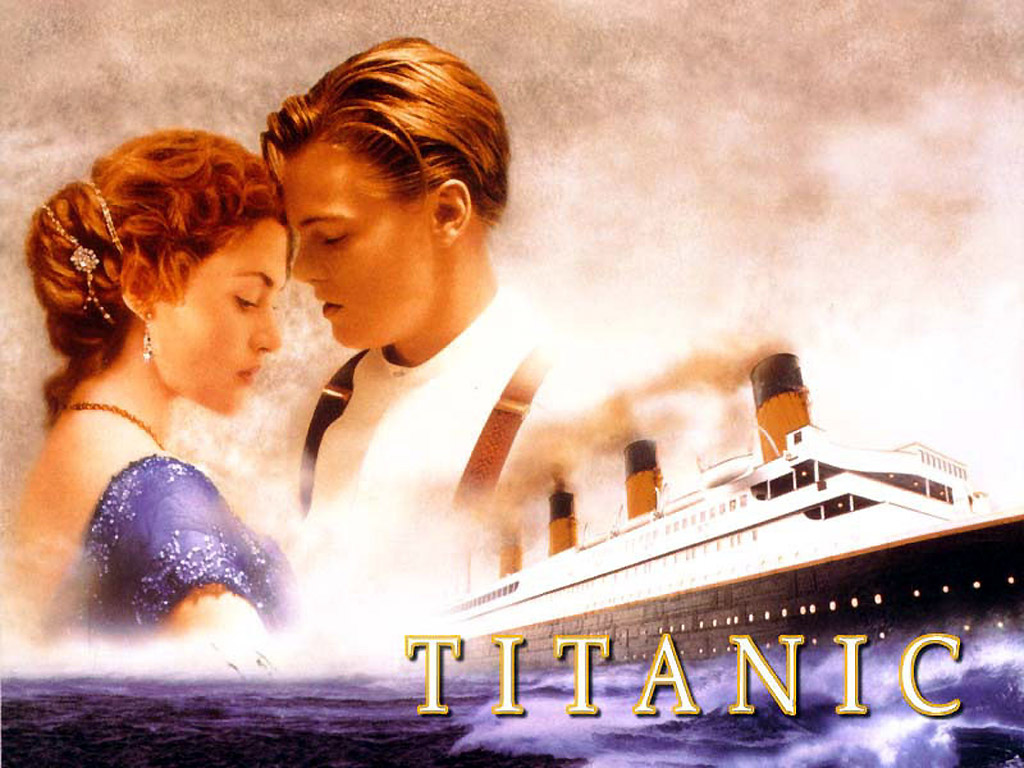
- The environment (set) where all the magic happens - I'll explain how this communicates effectively by using the 1997 film Titanic. It'll be very easy to understand that way.
Lighting
Basically
speaking, lighting is
essentially an aspect of film that involves deciding whether a certain
scene of
a film is bright or dark; and if it's dark, which objects receives the
spotlight. Lighting is ridiculously important for any film,
whether it be a cartoon film like Disney or a real life film. Without
lighting,
there is no mood or tone set for the story, which in turn, makes for a
poor, dead
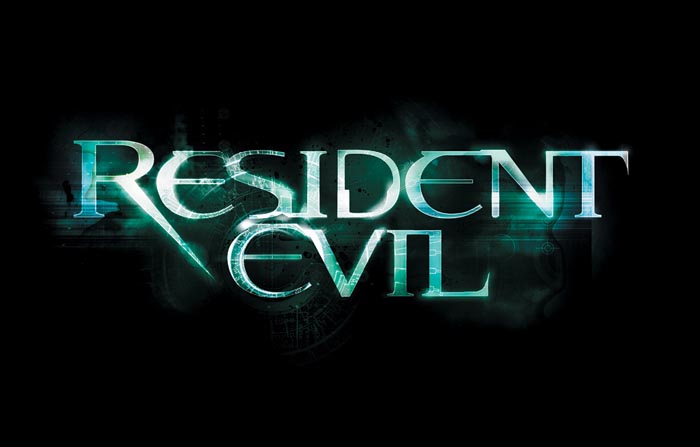
movie. For instance, take into account famous horror films, such as Resident Evil. The film itself is
basically about a group of survivors who survive a virus outbreak that turned
the civilians into zombies, but lighting is used in such a way in this film that
it increases the suspense that horror movies are known for.
Take a look at this trailer for Resident Evil. (Make
sure you skip to the actual trailer; so skip to about 34 seconds into
the clip.) Notice the lighting used in those 30 seconds. It says quite a
bit about the film already, such as:
- It's going to be a movie filled with action. This can be seen easily since the lighting shows where all the action is, such as the explosions towards the end.
- More specifically, it's going to be a horror movie. This is evident since the film makers made the set in a night setting by using clever lighting techniques; they know the audience considers night time to be associated with scary stuff.
 |
| The film's title has a black background, signifying its dark tone. |
Take
a look at the title of the movie in that image. What can you notice
right away? Well, the part that should jump out at you the most is the
fact they made the entire background pitch black with only
the words “Resident Evil” shown in bright lights. By doing this simple yet effective technique, they
basically tell the audience right from the start that it is certainly not a “happy”
movie. However, it’s important to note that lighting is extremely important for
any film genre; not just horror. However, it is stressed upon much more heavily on those horror films because it’s
what creates suspense and gives the audience the chills. Well
that about wraps it up with lighting! Let's move on to characters and
how they also play a key role in communicating to the audience.
Characters
 |
| Characters are among the most important parts of any film. |
Ah, characters. You know, the ones that
you fall in love with, either saying something along the lines of “oh he’s so
cute I just wish he was mine!” or, more importantly, “wow, I can totally relate
to him/her; my life is just like that”. Characters
are,
without a doubt, one of the most important things ANY film MUST have if
it
hopes to even be worthy enough to be shown on the big screen to an
audience;
never mind just a poor or good reception. The reason why characters are
so
imperative is because they are a key role in communication thorough your
films,
just like lighting is.
If you create a character that the audience can relate to, then they’re that much more likely to pick the character as their favorite, making the film appeal to them all the more. There are many ways to create a relatable character, but the most common and effective method is looking at what's going on the world today. For instance, you may want the characters to address problems in households that everyone knows about, such as sibling rivalry. Once you know that, then you can begin to create characters that do just that; have a rivalry with each other. They can say mean things to each other, or they can insist that one doesn't understand the other. If there’s one very important thing I’ve learned about appealing to the audience, it’s that they love to see that you, the filmmaker, can relate to their life and essentially “talk” to them through your film’s characters. If this is a little confusing, perhaps I can make it simpler with an example; here’s a clip from a Disney movie entitled Lilo and Stitch.
If you create a character that the audience can relate to, then they’re that much more likely to pick the character as their favorite, making the film appeal to them all the more. There are many ways to create a relatable character, but the most common and effective method is looking at what's going on the world today. For instance, you may want the characters to address problems in households that everyone knows about, such as sibling rivalry. Once you know that, then you can begin to create characters that do just that; have a rivalry with each other. They can say mean things to each other, or they can insist that one doesn't understand the other. If there’s one very important thing I’ve learned about appealing to the audience, it’s that they love to see that you, the filmmaker, can relate to their life and essentially “talk” to them through your film’s characters. If this is a little confusing, perhaps I can make it simpler with an example; here’s a clip from a Disney movie entitled Lilo and Stitch.
Based
on watching that one minute clip,
can you tell me what the central plot of the movie is about? Sure you
can! And
you don’t even have to deeply analyze it to understand it either. Just
by watching
this brief clip, you can already see the central plot of the entire
movie based on the characters' speech to each other; the two girls
involved in the scene are struggling
with the fact that Lilo (the little sister) is being taken away from
Nani
(the big sister) to be put in foster care unless Lilo listens to Nani
more so she can prove that she's a good guardian. This fight between the
two siblings is typically dubbed as "Sibling Rivalry", something quite
common among our own households with older and younger siblings. In this
sense, the two characters become relate-able immediately. The older
siblings would understand Nani's frustration of having to look after a
little sibling who doesn't listen whereas the younger siblings would
understand Lilo's frustration of having no one understand her, not even
her big sister. This would cause Nani to be a favorite among older
viewers while Lilo would be a favorite of younger viewers; in turn this
would give the film a better reception since the characters are similar
to both sides, creating communication. The best films are those that
communicate with characters that can relate to all audiences, not just
one particular group of people.
 |
| Non-human characters can work quite well alongside humans. |
This brings me to my next point; it's not enough just to create the
same "type" of characters that can relate to one audience over and over
again. It's imperative to note that you're inevitably going to come
across a different group of viewers who may want to see an adorable
little critter who also understands their life rather than simply human
characters (like Lilo and Nani in Lilo and Stitch) again and
again. This is why in some movies it's best to use not just human
characters, but animal characters as well; this is especially true of
cartoon films like Lilo and Stitch, where the audience can
consist of both young kids and grown adults. From my experience, animal
characters tend to work very well for any audience; sometimes they're
more effective than humans.
I'll give you an example; the whole social concept of "blending in". In Lilo and Stitch
both Lilo and Stitch (the cute character you see in the image above)
struggle with blending in, due to them being outcasts and regarded by
others as "weird". In this sense, it creates a strong bond between the
two since they are similar in character; coincidentally, both characters
share some personality traits, such as being mischievous and
disobedient at times. Speaking of which, one other thing I learned as a
film maker is that audiences love to see different characters bonding;
it communicates the fact that though we are all different, it doesn't
mean that we have to dislike each other because of those differences.
Just take a look at films like Lilo and Stitch (of course there are many more that exemplify this, like Dreamworks' How To Train Your Dragon, but I'm using Lilo and Stitch as an example.).
Sure we might have a rocky start at first, but eventually we grow on
each other; just like Lilo grew on Stitch and vice versa. Communicating
everyday life to the audience is key to making a successful film; it's
even better when you can use different types of characters, like humans
and animals. Well, that about wraps it up for characters. Let's move on
to music, another very important part of film necessary for effective
communication.
Music
 |
| Background music is often present in kissing scenes. |
Next
on the list is music. I'm sure all of us have that favorite soundtrack
or song that we've heard in films and television. Music is another
important aspect that a film requires for good communication because it
gives a scene more "power". What I mean by that is music can put more
emphasis on a scene and make it better/more empowering, depending on the
song's tone (and sometimes, lyrics). Music doesn't have to be
instrumental; sometimes there can be lyrics as well. The purpose of
music in a film is to expose the mood of the scene in which the music is
played; if it's a dramatic beat with a lot of drums it's most likely
going to be an action scene. This is often referred to as the "musical
score", where we film makers decide the perfect music to go along with a
certain scene. Music is found in nearly every film/television genre;
whether it be action, reality, drama, comedy... whatever. You name it,
it's probably there.
To
show you how music can really make the difference between receiving a
boo or applause from the audience for a scene, let's take kissing scenes
as an example. Kissing scenes are usually found in romantic films, but
they can also exist elsewhere, such as television or even in cartoon
films. To make my point easier to make, I'll use the television show iCarly. Take a look at the following clip; it is from the episode iKiss. Skip straight to the kissing part if you'd like; it's where the music happens. That's where I want you to pay attention.
Did you hear the music? More specifically, did you pay attention to the lyrics? (If not, the lyrics are as follows):
I don't know if I'm gonna change
Wasting time and another day
I keep running away
Even from the good things
Even though this song only lasts for a few seconds, the fact that the lyrics come on as
they're kissing gives this scene that much more depth. It signifies to
the audience that the two characters are confused, as they've never
kissed before and are supposedly "enemies" ("go right back to hating
each other as soon as it's over".) but are actually unsure at this point
of their relationship. It also communicates an inner conflict between
the two; they are unsure if they'd be wasting time by trying to change
for the other (I don't know if I'm gonna change, wasting time and another day).
After the kissing scene, thanks to the song's lyrics, it's clear that
they're only "enemies" because they want to hide the secret feelings
they have for each other (I keep running away, even from the good things). They may not be ready for a relationship right away because they've been enemies for so long (prior to this episode, the two were actual enemies, but after this scene the two warm up to each other in later episodes), but one kiss changed their view points on each other.
Now
you're probably wondering "how in the world can you tell all this? It's
just 4 lines of lyrics." Well young film maker, those 4 lines of lyrics
are all you need to tell a lot about a series or a film. That's why we
carefully choose our soundtracks to go along with our scenes. The
audience knows this as well; they can also tell by the song's lyrics
that this scene emphasizes the hidden romantic attraction that exists
between the two characters, otherwise they would not have kissed in the
first place (and they would not have added that music!). To better
understand what I mean by this, watch this kissing scene from a
different film, but turn off the sound of the clip so it's silent.
Did
you notice that this time, because there was no music, this kissing
scene is "dead" in a way? Even though the angle of the shots were very
good, the fact that there was no music in the background causes the
audience to think it's just "another kiss", when in fact it's supposed
to be much deeper than any ordinary kiss. Now, watch the clip again,
this time with sound. You can see that it becomes MUCH better, because
the music provides an effective form of communication. Even if you have
never seen this movie before, and you only watch this clip, you can
already see that the music of choice was excellent for this scene. If
you really took a second to analyze the background song's rhythm and
happy tone, you should be able to clearly observe that the two
characters are experiencing true love. So, the music causes the audience
to believe it's no ordinary dating kiss; it's the kiss of true love.
Essentially speaking, if you use music correctly in such a way that it
provides increased emphasis on a scene, it will prove to be a very
effective communication feature.
You
also have to be careful with the choice of music as well. You're not
going to have dramatic drum beats and a beat-boxer in the background
with a kissing scene, simply because it will kill the romantic and calm
mood a kissing scene is supposed to have. In this way, the wrong type of
music can send the wrong type of message to its viewers, possibly
making the film as a whole become a turn off to the audience. Now that
we've talked about the importance of music in communication through
films, the final aspect that I'm going to talk about in this guide is the natural environment where you put all these tactics together to form a beautiful motion picture.
Natural
Environment
 |
| Titanic is a great example for showing how natural environment matters. |
The
final aspect I'm going to talk about in this guide to communicating
through films is the natural environment in which the film is shot, AKA
the set. Although it may not seem as important as characters, music, or
lighting, it actually holds a greater significance than meets the eye! The
set in which you shoot your movie can be a deciding factor whether your
audience totally understands where the film takes place and becomes
engaged with it, or if they are completely clueless and leave out of
frustration of not being able to understand. To better explain this
concept, I'm going to use a certain film as an example I'm sure
everybody is familiar with; the 1997 film Titanic. Titanic is a
perfect example of where the natural environment is crucial to deciding
whether communication in the film is a success or failure.
In Titanic's case, the natural environment in which the film was shot was extremely important. Part of the reason for Titanic's
huge financial and critical success was due to the realistic
environment in which it was shot; you would think it's actual footage of
the original boat sinking many years ago. This is due to the fantastic
set in which the film was shot; it had props, it was shot on the ocean,
the ship used in the movie was huge, and I can go on and on. But the
point is that the film recreated the sinking of the Titanic perfectly
thanks to the environment in which it was shot. Here's a clip from Titanic so you understand what I'm trying to say.
Notice
how real that looks. From the ship breaking apart, to the people losing
their minds and diving into the freezing ocean, to the inside of the
ship flooding, to everyone going insane desperately searching for a
lifeboat... it goes on and on. Because it is so realistic, it really
engages the audiences' mind into the film; they love seeing action and
drama happening when it all looks so real. Now, imagine if the film had
not been shot in the ocean or on a ship. Do you think the film would
still be a critical success? I certainly don't think so. The audience
would not be able to understand what the film is talking about, or if
they do understand, they'd think that it's a sad excuse of a
movie; a "wannabe", if you will. Had the film had a poor natural
environment, all of the realistic traits would simply not be possible.
For instance, there'd be no ship to break in two, there'd be no ocean
for the scared-to-death people in the movie to jump into... it'd just be
a horrible movie. The environment in which all of the drama would
happen would just make it much less appealing, if at all.
 |
| Make the set look like where ever the plot is happening! |
For
this reason, if you desire to communicate with your audience well (make
them REALLY feel for your movie!), then you'd best think about the set
where your film will take place! I can't stress this enough. If you're
gonna be shooting a movie about Hawaiian culture for example, make sure
the set looks like Hawaii and not Alaska.You'd be surprised on how some
movies out there don't take this very simple yet very crucial aspect of
film making into account as much as they should. Well, that's about all
I have to say about the importance of the natural environment (set) for
effective communication in your movies. Making your sets look realistic
= the audience understanding the setting of your movie which =
effective communication which = $$$ for your film!
Quick Tips
 |
| If you can take all this into account, this is where you can end up! |
Well,
I've talked about how lighting, characters, music, and the natural
environment makes for a marvelous film with excellent communication to
an audience. As I said before, there are more features besides these
four. However, I firmly believe that they are the most important aspects
for communicating through film. I know that I gave you a lot of
information for a beginner's guide, so now I'm just going to list some quick
tips for you to follow; just in case you got lost up there. Here is a list of
quick tips that may be helpful whenever you think about communicating through films:
- Think about who your audience is. Is it younger viewers such as kids or young teenagers, or is it more mature viewers like older teenagers and adults? Depending on who your audience is, you’ll find that if you wish to communicate successfully in your film, the message has to be suited to the viewer. You’re not going to show a movie like Titanic to a toddler, much like you wouldn’t show Lilo and Stitch to an old man. Neither would understand the message of their respective movies due to different mindsets.
- Make sure you assemble a diverse film crew. They may be able to catch something that you don’t, or they’ll understand communication to the audience(s) through the film differently than you do. This can help you make the movie appeal to more than just one audience; like I said, all the good films appeal to multiple audiences rather than just one group.
 |
| Give credit where it's due! |
- Make sure to give credit where it’s due. The neat thing about film is that there’s no need for a complicated “Works Cited” or “References”; you can simply cite a person’s idea in the credits or in the beginning. Lilo and Stitch, for example, gives credit to Chris Sanders for coming up with the idea for the movie; in the beginning after the title of the movie is shown on screen, it says “based on an idea by Chris Sanders”.
Final Remarks
 |
| This could be your home! |
Well, young film makers, I’ve pretty
much told you everything you need to know about how to communicate to your
audience through your films. I talked to you about lighting, characters, music,
the natural environment, and I gave you some quick tips basically summarizing
everything, along with a bit of new information. Like I said, just make sure to
give credit where credit is due. You don’t want to be sued for not saying thank
you in the film or publication. (Trust me, people take this
stuff very seriously.) It’s even more important because your films will likely
make hundreds of thousands of dollars if it’s very good! Remember, doing all
these things will take time; you may suffer from poor reception for your films
from critics at first, but this is where perseverance and patience come into
play. Filming is an amazing art that can really talk to people in an
awe-inspiring way, but you have to want it enough by continuously making you
and your films better. If this means fixing that weak angle, putting the
spotlight on something else, adding or removing a character (whether human or non-human),
picking that right soundtrack for a scene, or even fixing up the set, do it! Trust
me, doing all these things will greatly enhance all of your films’ communication
potential! Thank you for reading. Remember,
you CAN do it. You CAN live in Hollywood in Los Angeles as a successful movie maker
that knows how to communicate to an audience. You just have to have the three P’s;
patience, perseverance, and passion. The road may get bumpy at times, but
if you got the three P’s, it won’t matter. Good luck young film makers!


References
Here is a list of URLs where I found the pretty pictures and videos (in order).
- http://www.cityyear.org/uploadedImages/CityYear/Local/Los_Angeles/Our_Work/los-angeles%5B1%5D.jpg
- http://www.visitingdc.com/images/hollywood-sign-address.jpg
- http://veronicagraham.files.wordpress.com/2011/06/film-set.jpg
- http://www.mediamikes.com/wp-content/uploads/2011/10/lion-king-movie.jpg
- http://today.ucf.edu/files/2010/07/badpixels-548x365.jpg
- https://www.youtube.com/watch?v=ZRmWLqrJkz4
- http://www.millaj.com/pics/resident-title1.jpg
- http://www.dvdizzy.com/images/l-o/liloandstitch-07.jpg
- https://www.youtube.com/watch?v=REs9XQdCzvk
- https://blogger.googleusercontent.com/img/b/R29vZ2xl/AVvXsEj2lI_D0YW7tXyKHogthW6dCJzu3RDb7hJQfswKk1rY5EXJ42n1LbgXVlpUUoAHvn4VNb96tKD4it2tW_6yuKWgBWaMbTPUeiuNF74qzSCgLZJvgfUVKIas0Tb2Vaz3sv289n3TI2PUFO_G/s1600/how-to-draw-stitch-from-lilo-and-stitch.jpg
- http://images.wikia.com/icarly/images/0/06/Sfilufinalkiss.jpg
- https://www.youtube.com/watch?v=U0Ytx2LS9qQ
- https://www.youtube.com/watch?v=h6MZ3X-fb0k
- http://www.tiptoptens.com/wp-content/uploads/2011/04/titanic-movie.jpg
- https://www.youtube.com/watch?v=iHsx1cvACkY
- http://www.virginmedia.com/images/silly-titanic-431.jpg
- http://www.travelcalifornia.com/images/los_angeles_night.jpg
- For the "idea by Chris Sanders" photo, I simply took a picture of the frame and uploaded it to the blog directly. I didn't pull it from any URL.
- http://www.placeluxury.com/wp-content/uploads/2011/02/9010-Hopen-House-3.jpg
- http://westranchbeacon.com/wp-content/uploads/2009/10/FilmHollywoodCinema.jpg
- http://a4.ec-images.myspacecdn.com/images02/116/c19f25197c2540ada674e0df45a00d1d/l.jpg
- http://www.film-video-production-crews-milwaukee-wisconsin.com/files/film_video_production_location_nightime.jpg
